
OPEN SOURCE HARDWARE // PROTOTYPE
Qeychain
A keychain-sized Solana signer.
Keys never leave the device.
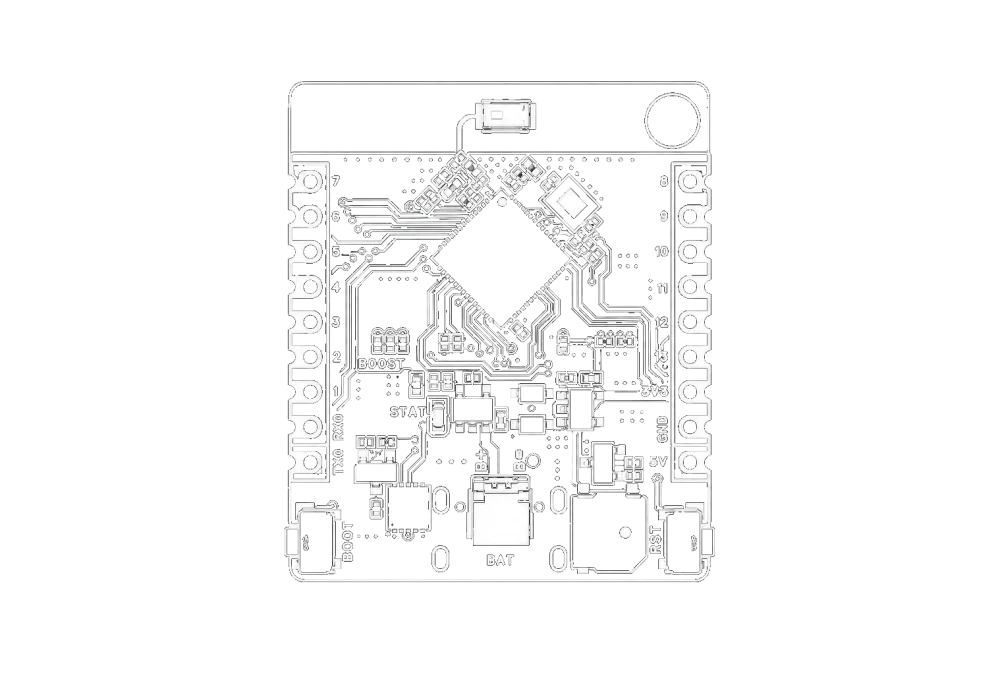
INPUT
Two buttons.
One clear answer.
Every Solana transaction on Qeychain needs a physical confirmation. SW1 approves. SW2 cancels. Hardware pull-ups mean the buttons are always reliable — no phantom taps, no accidental approvals.
What you press is what gets signed. Nothing more.
SECURE ELEMENT
Keys locked
in silicon.
The OPTIGA Trust X secure element handles every cryptographic operation. Private keys are generated inside the chip, stored inside the chip, and never — under any circumstances — exposed to the ESP32 or the USB bus.
Even if the MCU is compromised, your keys stay safe. The hardware enforces it.
DISPLAY
Always in view.
Nothing missed.
The SSD1315 OLED shows live token prices, pending transaction details, and fee dashboards right on the device. Verify exactly what you're signing before you press the button.
Shared on the I2C bus at address 0x3C, keeping the design compact without compromising readability.
BAGS API
One press.
Token live on Solana.
Qeychain integrates directly with the Bags API — your one-button path to launching tokens, managing fees, and claiming rewards on Solana. The Qeychain handles the signing; Bags handles the rest.
Live token feeds, fee dashboards, and share configuration updates all flow through the same simple API.
{
  "ticker":    "BONK",
  "supply":    1000000,
  "signer":    "QEY...",
  "hw_signed": true,
  "sig":       "5kT...vR2"
}
FULL SPECIFICATIONS
Every component,
accounted for.
| Processor | ESP32-S3 with Wi-Fi 2.4 GHz and Bluetooth LE |
|---|---|
| Secure Element | OPTIGA Trust X — Infineon Technologies |
| Display | SSD1315 OLED, 128×64, I2C address 0x3C |
| Input | SW1 (GPIO38) + SW2 (GPIO39) — active-low with hardware pull-ups |
| Feedback | WS2812B RGB LED (GPIO48), status LED (GPIO47), buzzer (GPIO21) |
| USB | USB-C for power and data |
| I2C Bus | GPIO15 (SCL) + GPIO16 (SDA) — shared by OLED and secure element |
| Expansion | 13 free GPIO pins across H1 and H2 breakout headers |
| API Integration | Bags API — token launch, fee management, claims |
| Form Factor | Keychain-sized PCB — fits on your keys |
| Source Files | Schematic PDF, BOM (.xlsx), Gerber files — all on GitHub |
| Status | Prototype — requesting samples now |
OPEN SOURCE
Inspect every trace.
On GitHub.
The full hardware package — schematic, BOM, Gerber files, and GPIO pin reference for firmware development. Everything you need to reproduce, verify, or modify the Qeychain design.
github.com/SkyRizzAI/Qeychain →- DIR hardware/
- ├── Qeychain_SCH.pdf
- ├── BOM_QEYCHAIN.xlsx
- └── Gerber_Qeychain_X1.zip
- DIR firmware/
- ├── pinout.md
- └── bags-api-integration.md
- DIR assets/
- └── board renders (front + back)
GET STARTED
Put Solana
in your pocket.
Request a Qeychain prototype. We'll follow up with availability and how to get started.